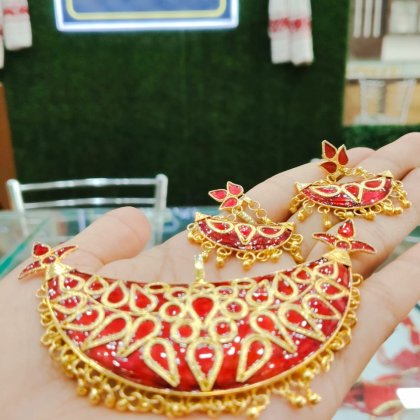
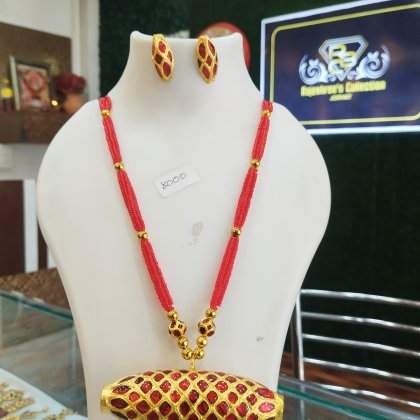
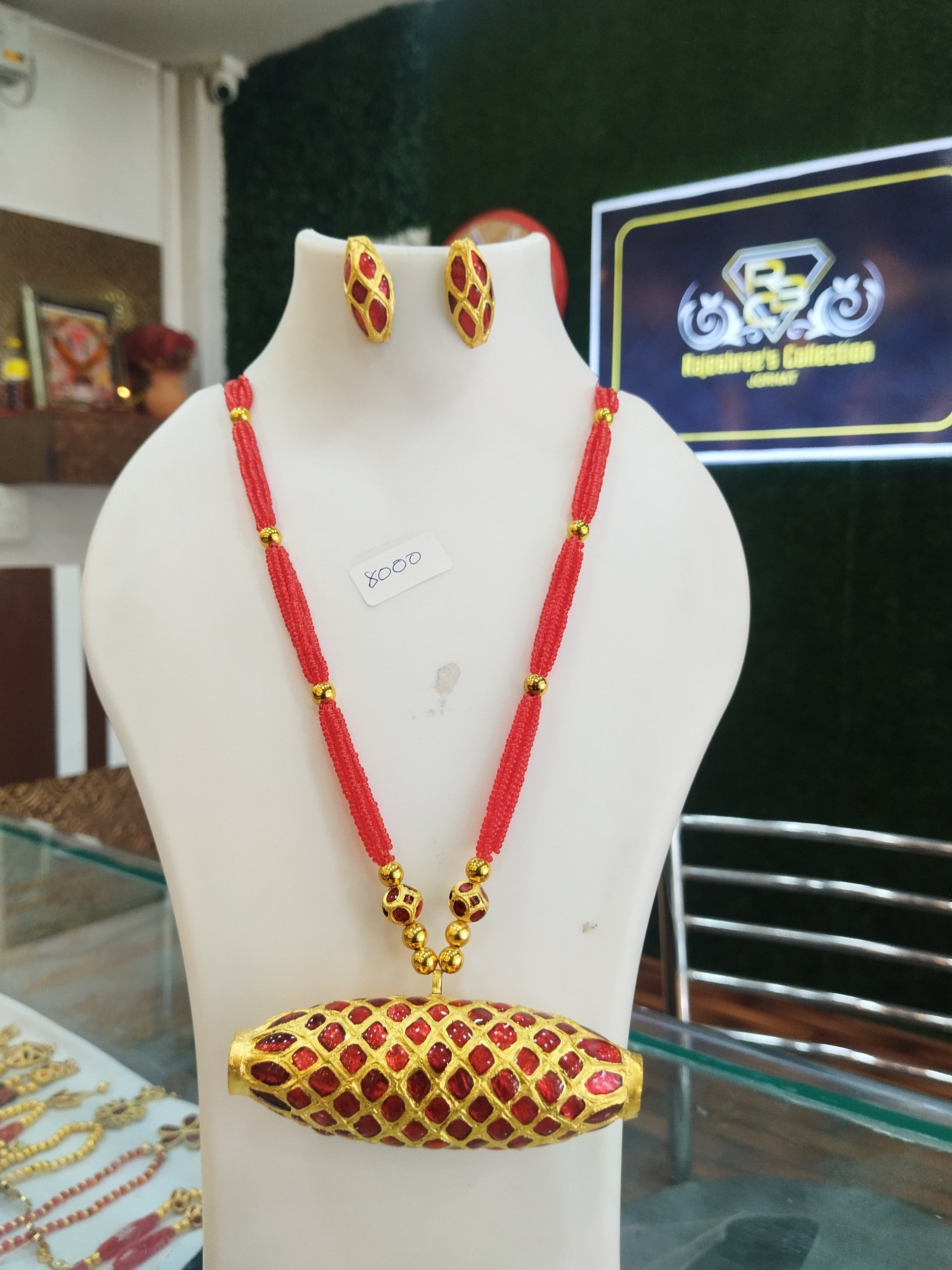
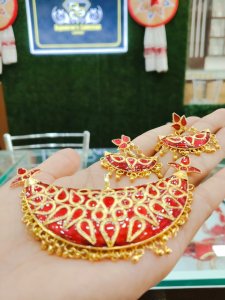
Junbiri is one of the most iconic and elegant pieces of traditional Assamese jewellery. Deeply rooted in Assamese culture and heritage, Junbiri is not just an ornament—it is a symbol of grace, pride, and identity for the women of Assam.
???? Design & Symbolism:
The name Junbiri comes from two Assamese words: "Jun", meaning moon, and "biri", a local term used for an ornamental pattern. True to its name, Junbiri is shaped like a crescent moon, often artistically enhanced with delicate filigree work and traditional motifs like flowers, the sun, or birds.
The crescent shape holds deep symbolic value across cultures, and in Assam, it is often associated with femininity, serenity, and natural beauty.
???? Materials & Craftsmanship:
Traditionally, Junbiri is crafted using gold or gold-plated silver, and sometimes with copper base for affordable versions. The design features exquisite handcrafted patterns using a technique called 'Jaapi' style engraving—reminiscent of the traditional Assamese hat.
The artisans who make Junbiri are often from families who have been in the jewellery trade for generations. Their craftsmanship reflects the blend of indigenous tradition and refined artistry that Assamese jewellery is known for.
???? Cultural Significance:
Junbiri is a popular choice during Bihu festivals, weddings, and other traditional occasions. It is typically worn as a pendant on a necklace, often paired with other Assamese jewellery like Dholbiri, Loka-paro, and Gamkharu.
It represents not just adornment, but also a connection to roots, heritage, and the enduring beauty of Assam’s cultural legacy.
In modern times, Junbiri continues to inspire contemporary jewellery designers who adapt its design for modern aesthetics while retaining its timeless charm. Whether worn with a traditional Mekhela Sador or fused with modern attire, Junbiri remains a proud emblem of Assamese identity.
| Shipping Cost |
|
| Shop Location |
No reviews found!
No comments found for this product. Be the first to comment!